For hi3d readers evaluating 3D assets, this review shows how Tripo’s textures and geometry affect file size, web delivery, and practical slicer use.
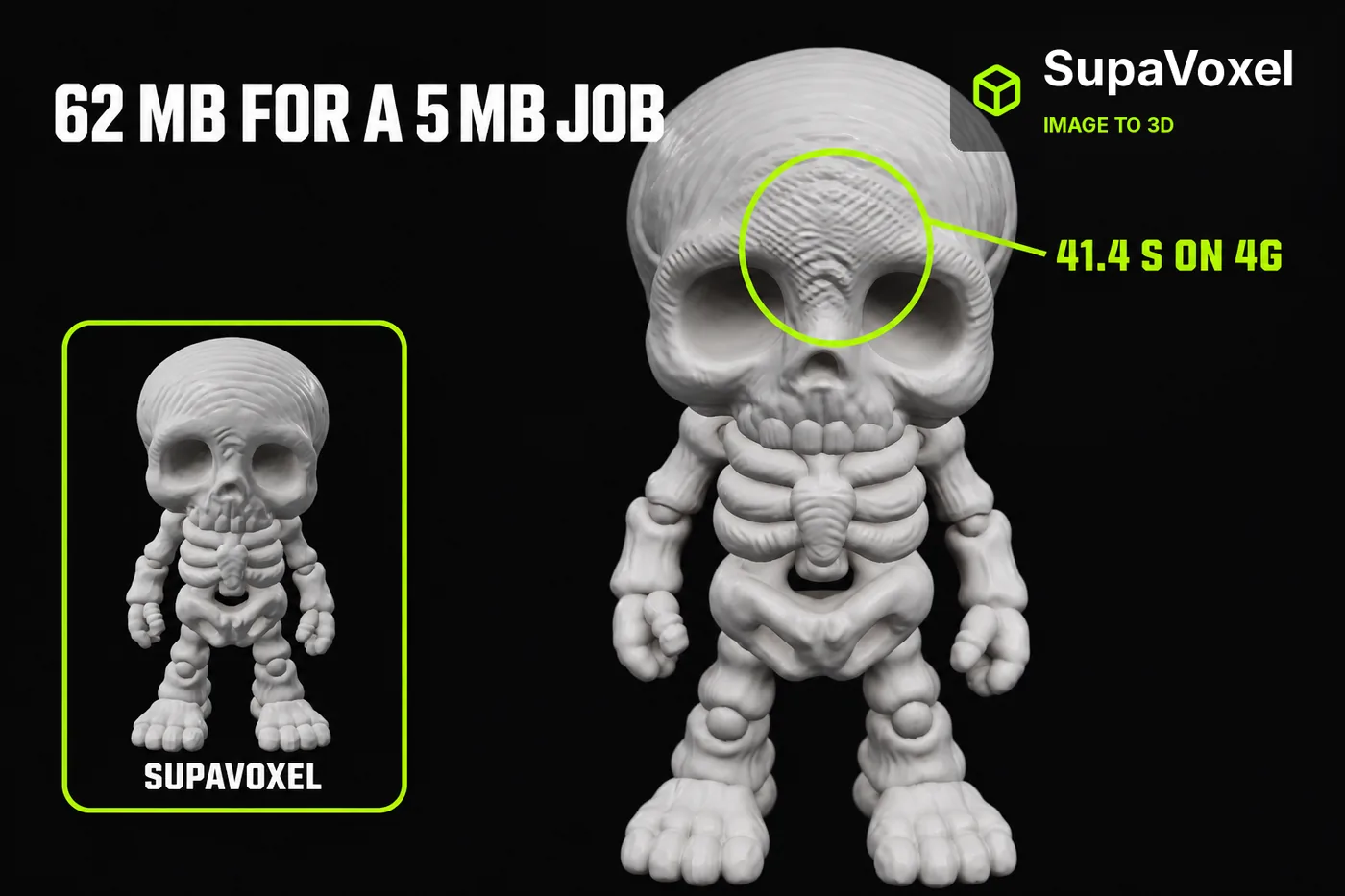
This is an independent test. Nothing here came from vendor access: both tools were used on my own free and paid accounts.
My verdict in 60 seconds — Tripo 60/100, SupaVoxel 90/100
Same photograph of a ball-jointed toy skeleton, same defaults, both files parsed offline. Tripo's GLB landed at 62,063,340 B. SupaVoxel's landed at 5,535,692 B. That is 11.2×, and 4.58 MB of Tripo's payload is texture data a slicer will never read. Tripo does buy something real with the weight — face and hand sharpness — and this article shows exactly where it is visible and where it is not.
- GLB on disk — Tripo 62.06 MB (62,063,340 B) · SupaVoxel 5.54 MB (5,535,692 B) · 11.2×
- Triangles — Tripo 1,961,102 · SupaVoxel 978,322 · 2.00×, visible only on face and hands
- Bytes per triangle — Tripo 31.65 B · SupaVoxel 5.66 B · 5.6× worse packing on Tripo's side
- baseColor map (the only one printing uses) — Tripo 1.69 MB, 4096² JPEG · SupaVoxel 0.17 MB, 2048² WebP · 9.9×
- Other maps (downloaded, unused) — Tripo 4.58 MB · SupaVoxel 0.36 MB · 12.9×
- First load on 12 Mbps 4G — Tripo 41.4 s · SupaVoxel 3.7 s · 37.7 s of blank viewport
- CDN at 10,000 loads/month ($0.085/GB) — Tripo $52.75 · SupaVoxel $4.71 · $48.05/month, $576.60/year
- Geometry VRAM — Tripo 55.8 MB · SupaVoxel 28.0 MB · two Tripo models on one page approach 112 MB
Four things worth knowing before a Tripo GLB goes anywhere near a web page:
- Tripo's texture stack is three 4096² maps totalling 6,271,422 B: baseColor as JPEG, metallicRoughness and normal, the normal map alone 2,180,063 B as PNG. SupaVoxel's is three 2048² WebP files totalling 525,702 B — 11.9× smaller in total, and Tripo's normal map by itself is over four times SupaVoxel's entire stack.
- Tripo's GLB declares KHR_materials_volume and FB_ngon_encoding. Neither compresses anything. SupaVoxel's declares EXT_meshopt_compression and KHR_mesh_quantization, which is why 978,322 triangles fit in 5.66 B each against Tripo's 31.65 B.
- Tripo's extra 982,780 triangles cannot be seen in a wireframe at 1000×750, where both meshes render as a black field — but they are perfectly visible in the 41.4-second download.
- Tripo genuinely resolves more: countable teeth, separated finger segments, a defined temporal hollow. That is Tripo's win in this article, and the exchange rate is 18.3× the credits (55 against 3) and 11.2× the bytes.
For anything that ships to a browser, the SupaVoxel file is the one I would upload: 3.7 s against 41.4 s on 4G and $4.71 a month against $52.75.
One input, two very different payloads
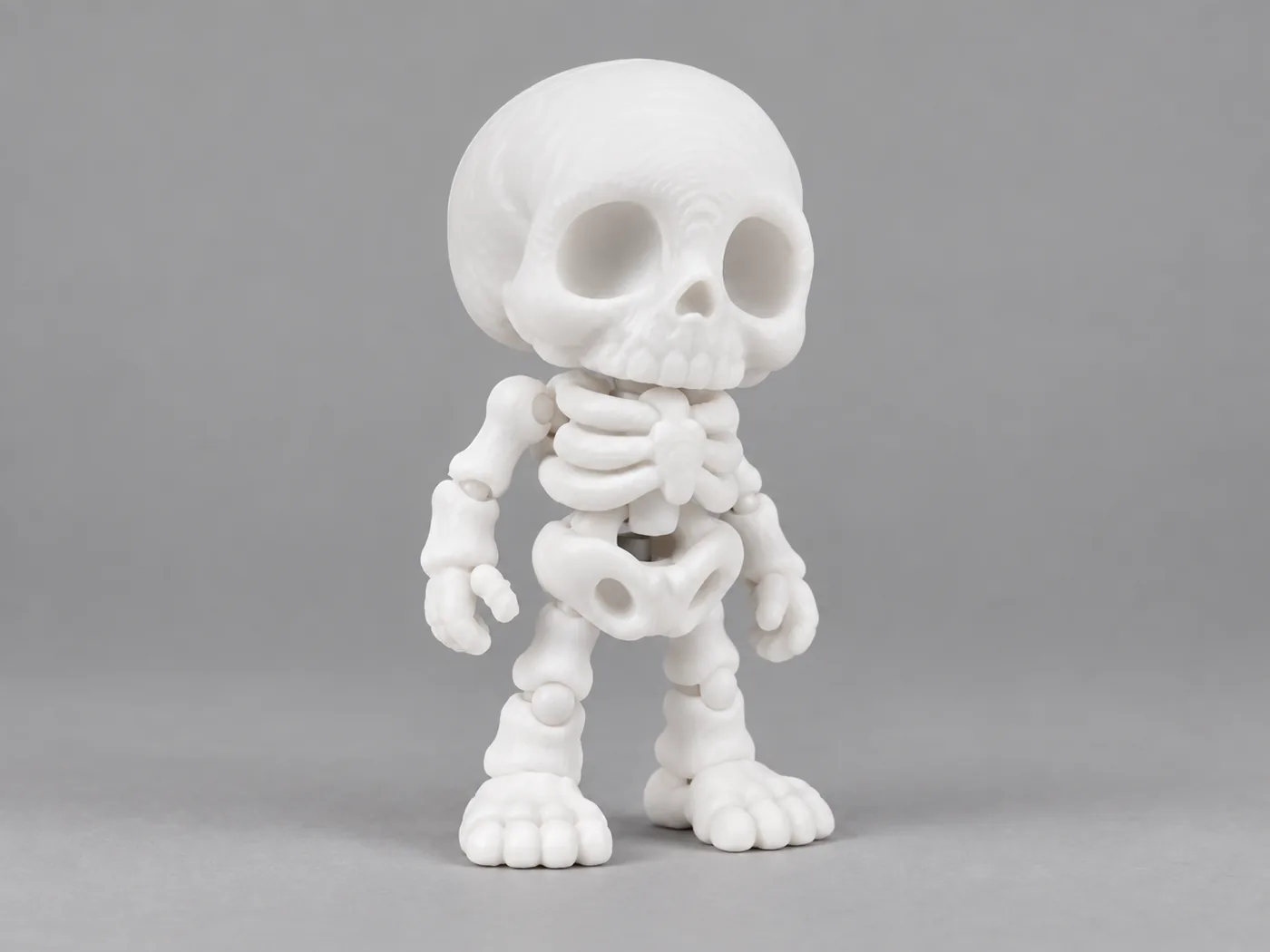 The shared input: 1,373,847 B, front view only, grey backdrop. Note that Tripo's output GLB is 45× the size of the photograph it was made from; SupaVoxel's is 4×.
Both tools were given this file and nothing else, and both ran on product defaults. Every render below is same-camera — Tripo exports at yaw 0, SupaVoxel at yaw 90, and the rig applies that offset.
Where Tripo's 2.00× triangles actually show
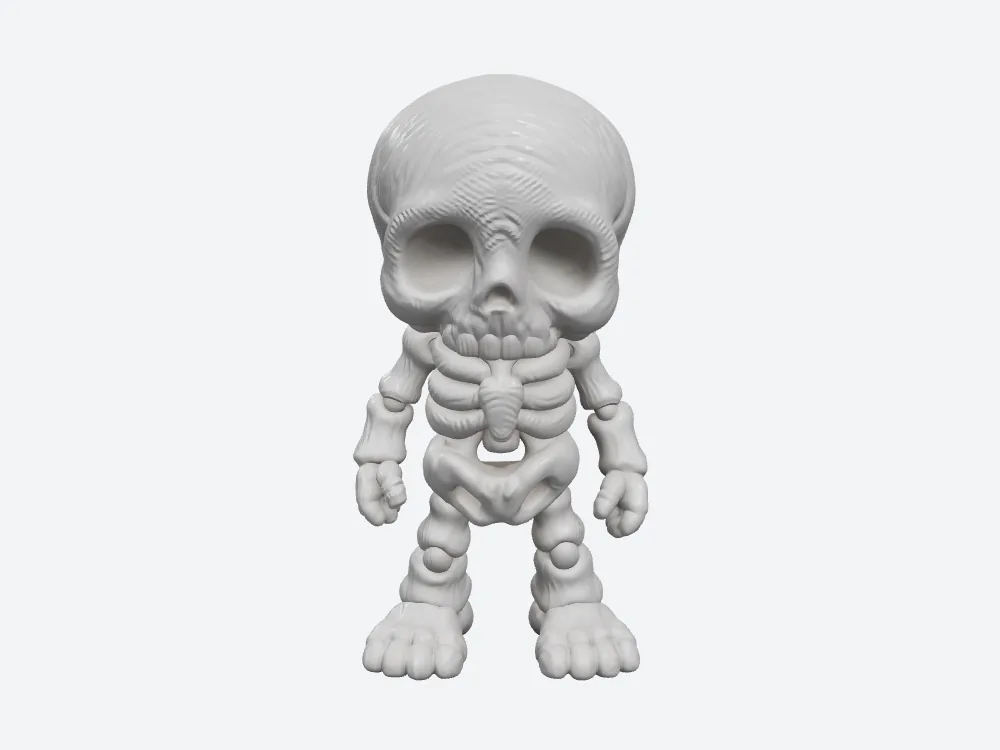 Tripo front: teeth countable one by one, a hard transition at the cheekbone and upper orbit, a clear sternal ridge, three distinguishable finger segments.
This is the honest case for Tripo's 1,961,102 triangles. It is a real difference and it is concentrated on small features. Second-order number: 62.06 MB, 41.4 s on 4G, to carry it.
And where they do not
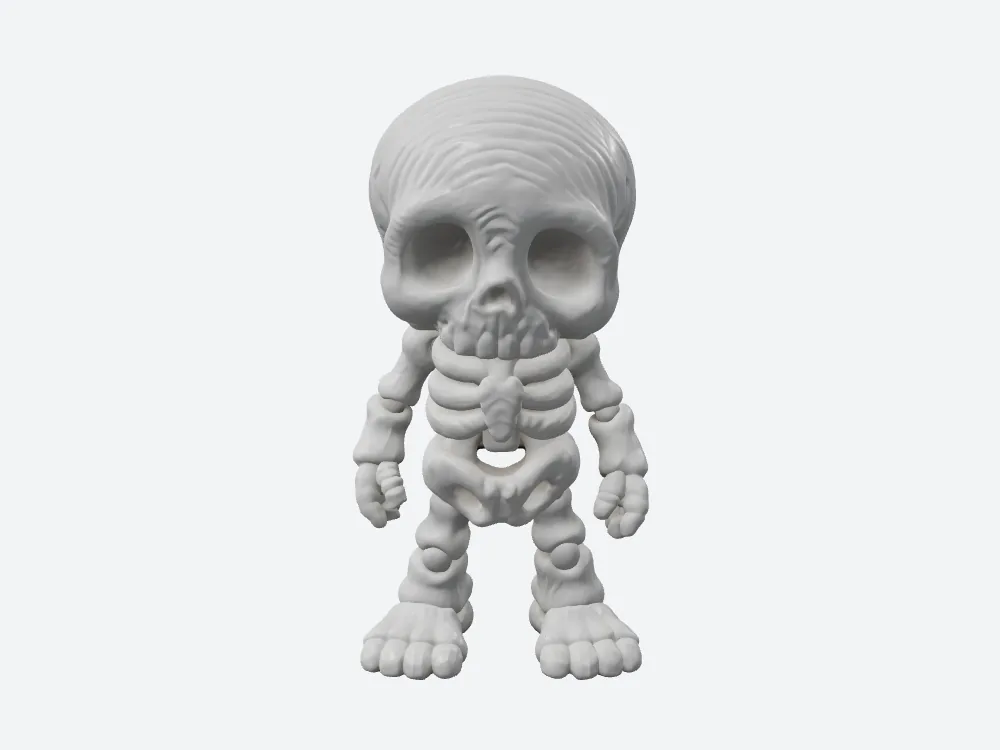 SupaVoxel front at 978,322 triangles: same silhouette, same separated rib arches, same open pelvic aperture, same discrete ball joints at elbow, wrist, knee and ankle. Softer brow and orbit, teeth as one continuous band.
The structural reading is identical between the two. Tripo's advantage does not extend to joints, proportion or the skeleton's readability — it is face-and-hands sharpness costing 56.5 MB of extra download. Worth reading the 2.00× the right way round: this is not a story about one side rationing triangles, it is Tripo laying down a fixed budget of them and charging 55 credits for it whether or not the subject needs that many.
Both tools copied the printer's layer lines
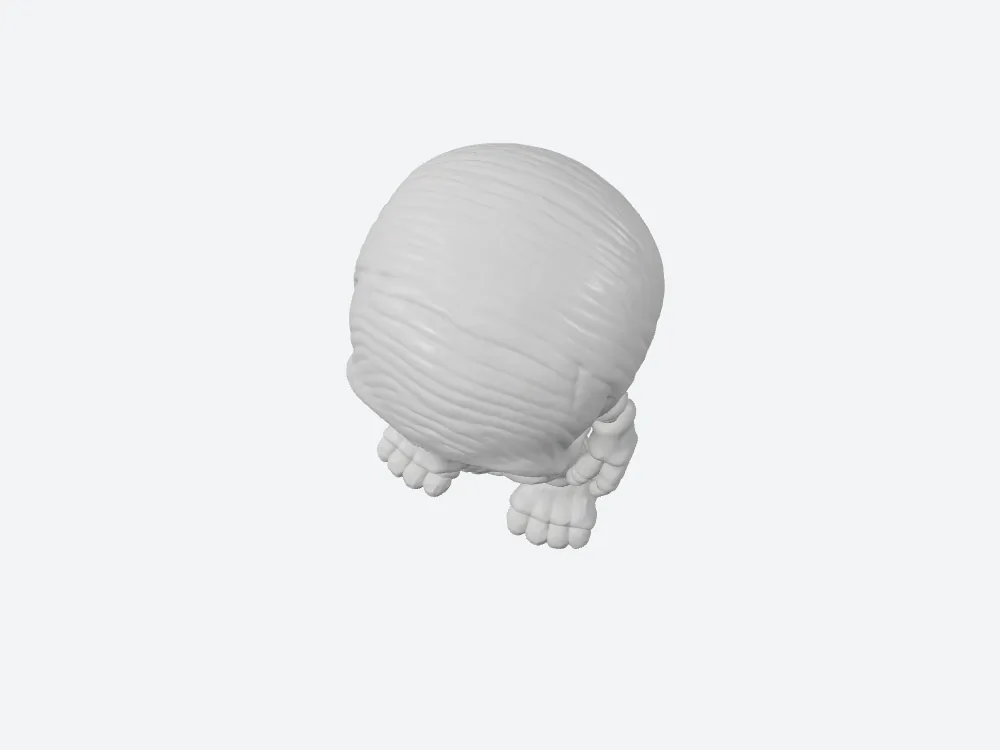 SupaVoxel from above: transverse ripples across the cranium. These are not generation noise — they are the FDM layer lines visible in the input photograph, rebuilt as real geometry.
SupaVoxel's ripples are coarser and closer to the scale of actual layer lines.
Tripo copied them finer, which is not better
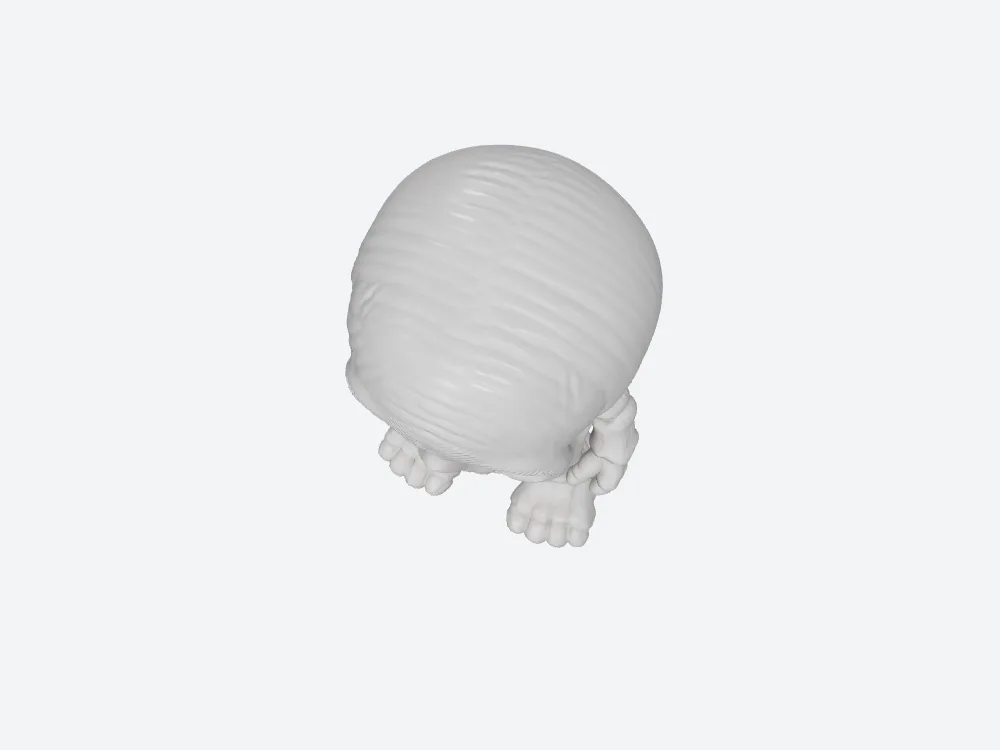 Tripo from above: the same photographed layer lines reproduced as geometry, thinner and denser.
Neither tool decided those ripples were an artefact worth removing — Tripo's Clean Topology switch was off by default. So Tripo's extra triangle budget is partly spent rendering a printing artefact at higher fidelity. Second-order number: those finer ripples sit at 0.1922 mm mean edge length, below a 0.4 mm nozzle.
At wireframe zoom, nobody can tell
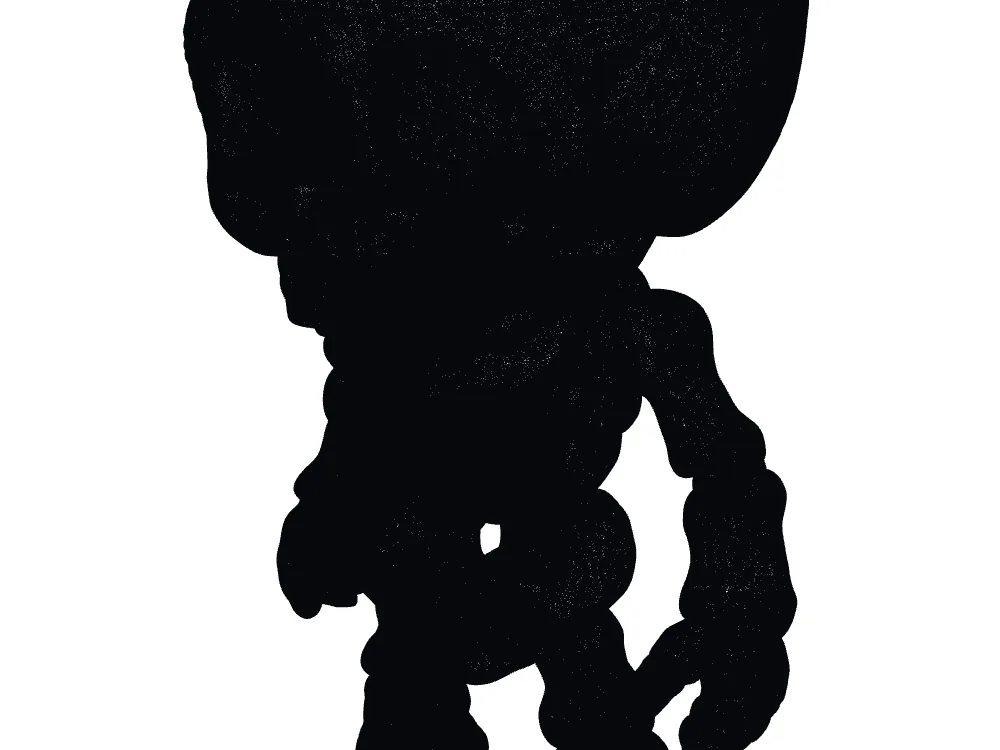 SupaVoxel's wireframe at 1000×750: 978,322 edges collapse into black, with a few white specks on the cranium where individual triangles are still large enough to resolve.
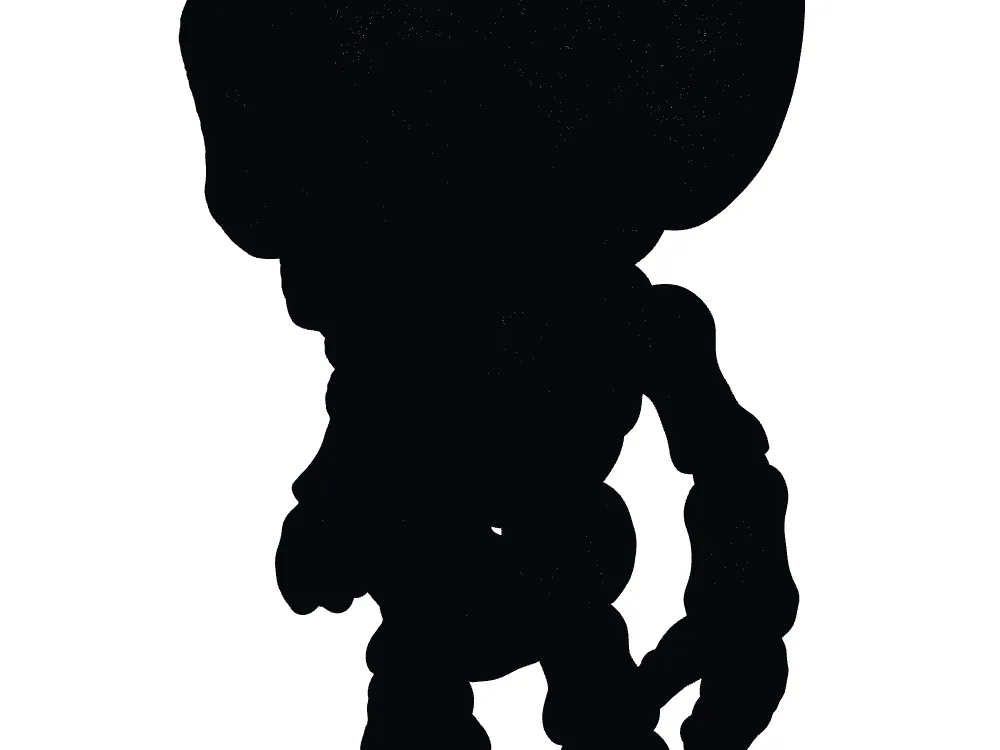 Tripo at identical zoom: darker still, the cranial specks mostly filled in by 1,961,102 triangles.
The only conclusion these two frames support is that at this viewing scale the 982,780-triangle difference is invisible. It is fully visible in the 11.2× file size.
Tripo's geometry without textures
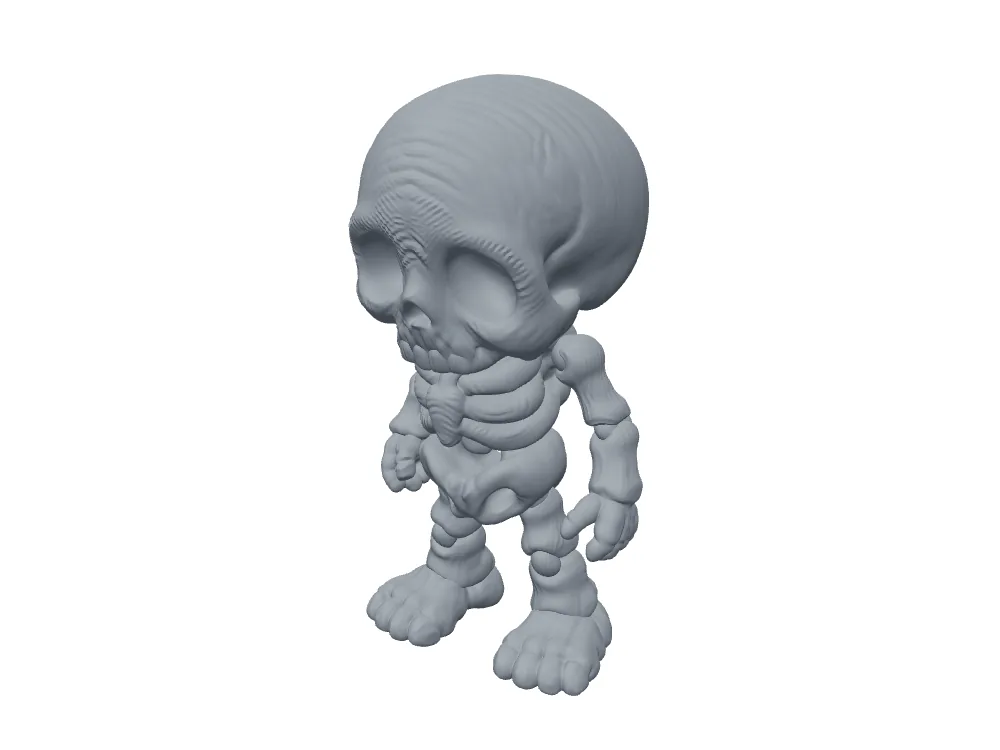 Tripo stripped of maps: more geometric detail in the facial transitions and finger segments, genuinely.
Now set that against Tripo's 2,180,063 B 4096² normal map. That layer is discarded entirely at slicing time, so on the print bed none of the texture-side sharpness survives — only the geometry does.
SupaVoxel's geometry without textures
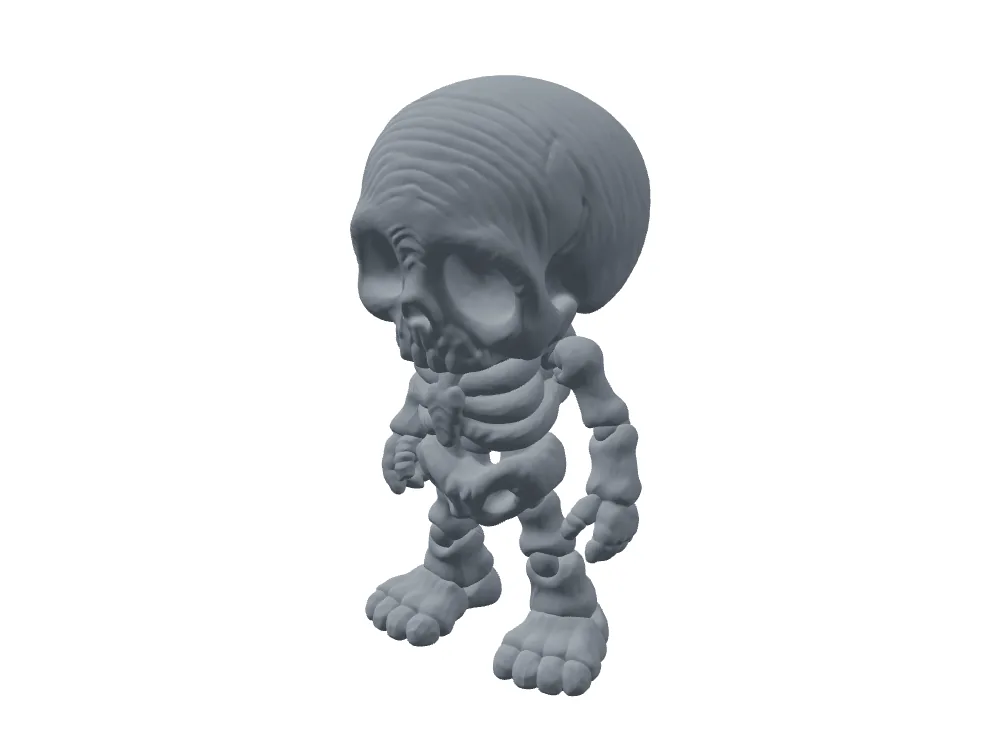 SupaVoxel stripped of maps: rib arches, finger segments, toe segments and joint balls all present in the raw mesh.
SupaVoxel's normal map is 38,886 B. The form is not being faked by textures — which is the point of the comparison, because Tripo's normal map is 56× that size and sits on geometry that was already detailed.
The texture stack, file by file
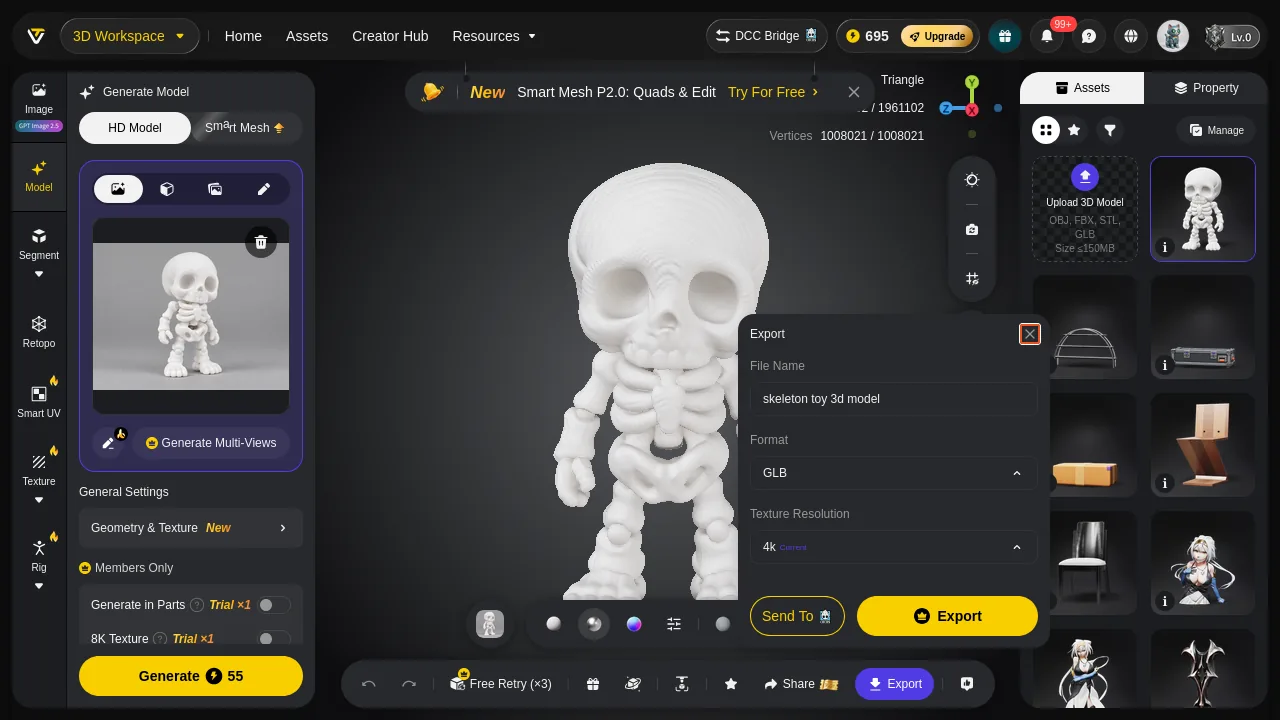 Tripo's export panel, Texture Resolution reading "4k Current" — the setting behind three 4096² maps.
Tripo: 1 material, 3 images, 6,271,422 B total — baseColor 1,686,513 B JPEG, plus metallicRoughness and normal totalling 4,584,909 B, the normal alone 2,180,063 B as PNG. SupaVoxel: 1 material, 3 images, 525,702 B total, all 2048² WebP — baseColor 169,600 B, the other two 356,102 B. 11.9× on the whole stack. Printing reads baseColor only, so 4.58 MB of Tripo's download is pure freight. Albedo ΔE and UV-shell occupancy I did not capture in this run; I am not going to invent them.
Bytes per triangle: 31.65 against 5.66
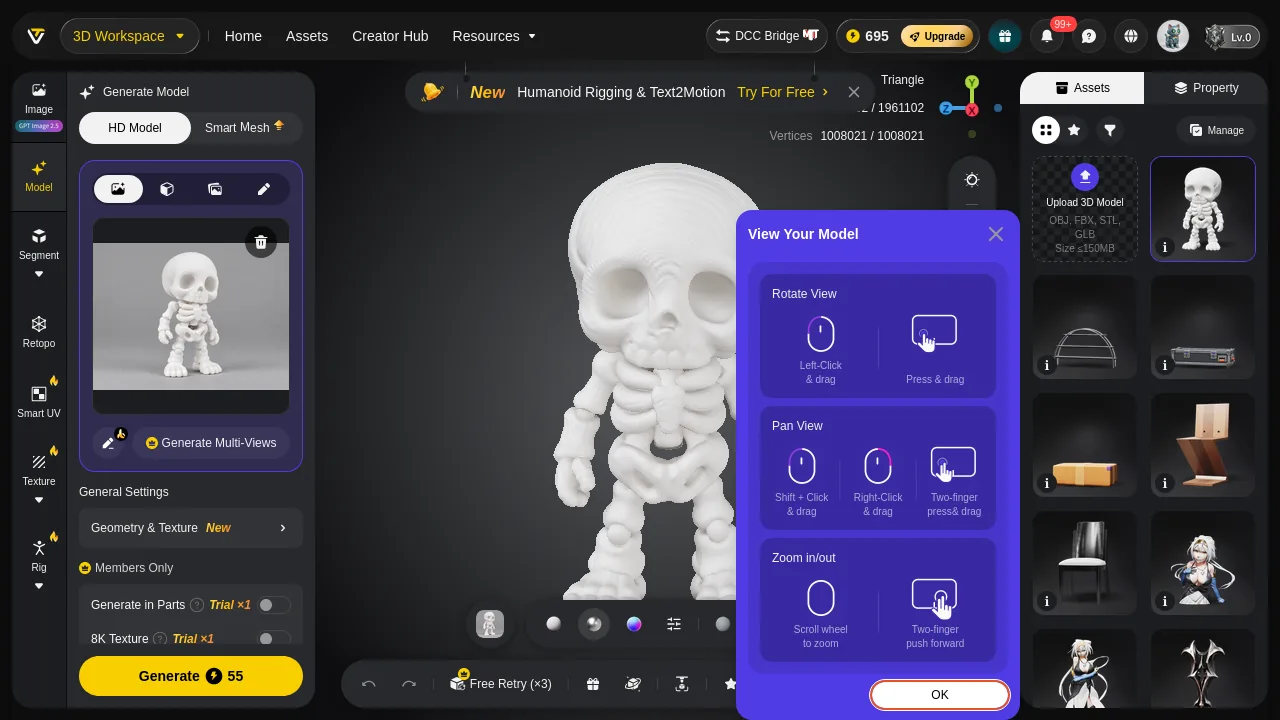 Tripo's completion view reporting Triangle …/1961102 and Vertices 1008021/1008021 — numbers that match my offline parse exactly. Tripo is honest about what it made.
Tripo spends 31.65 B per triangle; SupaVoxel spends 5.66 B. The reason is in the extension list: the SupaVoxel GLB declares EXT_meshopt_compression and KHR_mesh_quantization, Tripo's declares KHR_materials_volume and FB_ngon_encoding — neither of which exists to reduce size. Second-order number: 5.6× packing efficiency, which is where most of the 56.5 MB gap comes from before textures are even counted.
Downloading the file: 41.4 s against 3.7 s
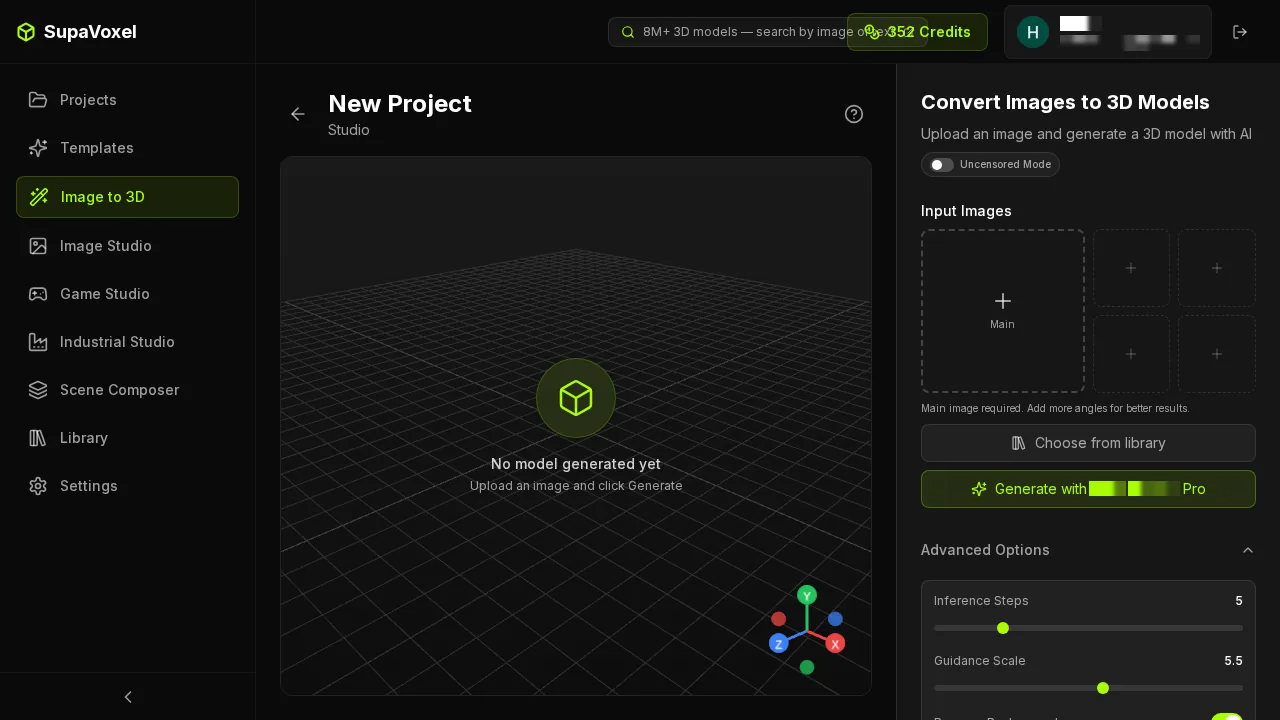 SupaVoxel's Advanced Options: Inference Steps 5, Guidance Scale 5.5, Remove Background. All adjustable, none rationed, none behind a membership wall.
On 12 Mbps 4G, Tripo's 62.06 MB takes 41.4 s and SupaVoxel's 5.54 MB takes 3.7 s — 37.7 s of extra waiting, per file. On 100 Mbps home broadband it is 5.0 s against 0.4 s. In a workshop pulling files over a phone hotspot, that is 37.7 seconds of nothing, every single time.
The monthly CDN bill
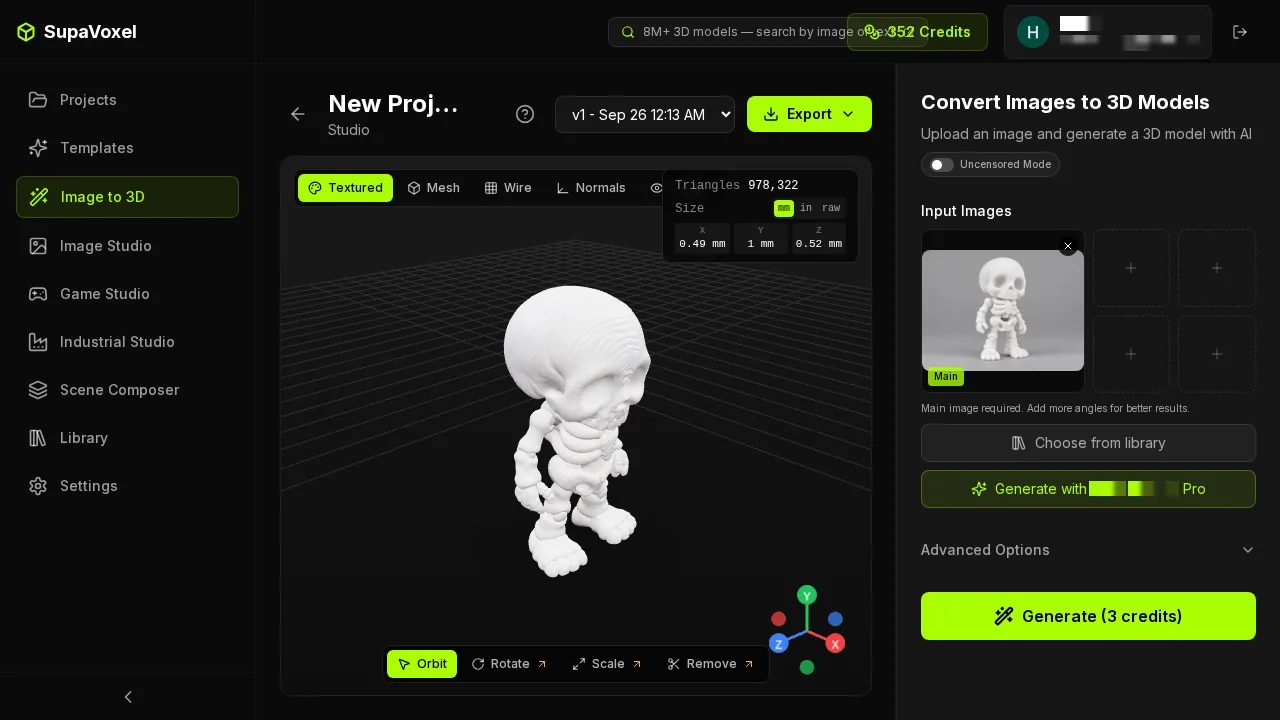 SupaVoxel's in-product inspection panel: Triangles 978,322 — exactly what I parsed from the GLB — with size readouts switchable between mm / in / raw, a v1 version dropdown, and five view modes (Textured / Mesh / Wire / Normals / X-Ray).
Put the model on a product page at 10,000 loads a month, at $0.085/GB: Tripo costs $52.75, SupaVoxel $4.71. That is $48.05 a month, $576.60 a year, for a model whose printed output differs by three cents of resin. And the 41.4-second first paint on mobile means most of those 10,000 visitors never see the Tripo model at all.
Geometry VRAM: 55.8 MB against 28.0 MB
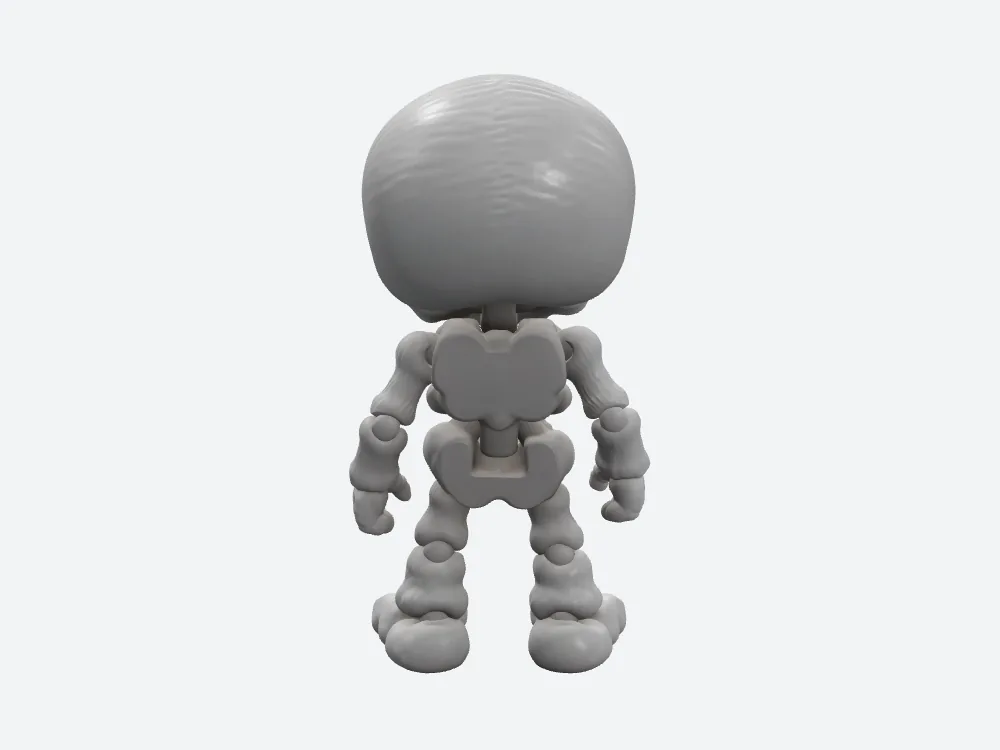 Tripo's back surface — invented, since the input photo has no back. Tripo's guess is the better one: a butterfly scapular contour with a graded central groove and a short lumbar column above the pelvis.
Estimated at 32 B per vertex plus 4 B per index: Tripo 55.8 MB, SupaVoxel 28.0 MB, 1.99×. Two Tripo models on one page approach 112 MB of geometry before textures. And on this frame Tripo wins outright — the unseen back is where Tripo's reconstruction reads more like bone, and on a skeleton that is the feature under test.
SupaVoxel's is a plate with a rectangular window
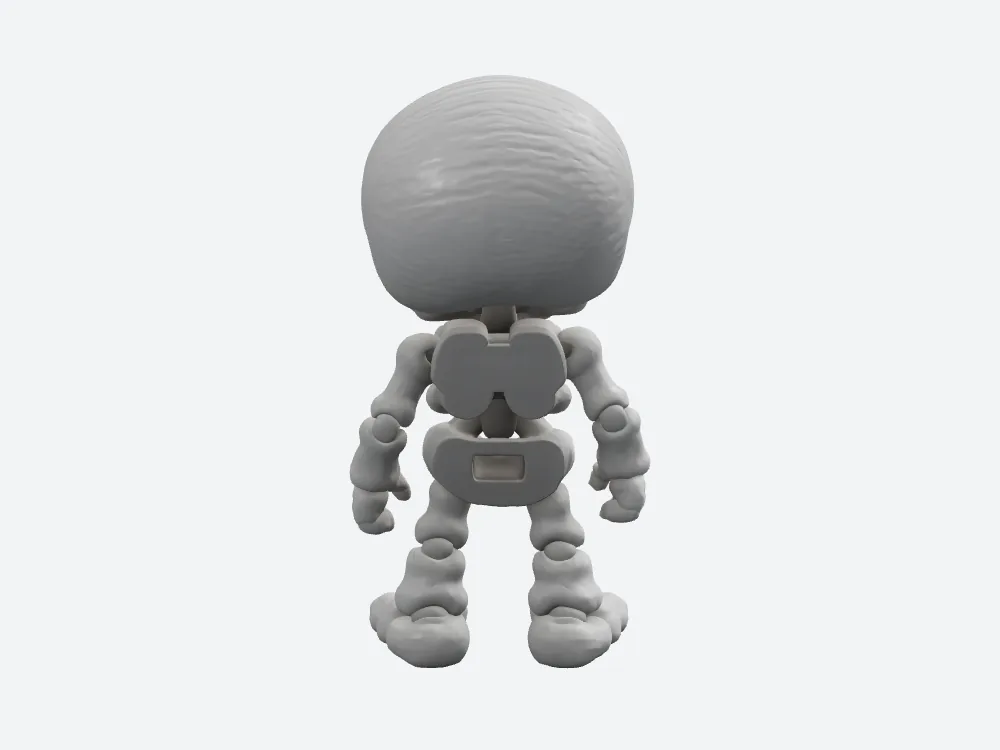 SupaVoxel's invented back: a hard-edged filleted dumbbell plate across the upper back, and a rounded pelvic plate carrying a rectangular recess with no anatomical counterpart.
Neither model reconstructed a spine; both smoothed a plate over the gap. Tripo's plate is more convincing. The trade ratio: that better guess arrives inside a 62.06 MB file at 55 credits, with a $52.75 monthly CDN bill attached, and it still needs every normal flipped before a slicer will treat it as a solid.
Final verdict: Tripo scores 60/100, SupaVoxel 90/100
Tripo's 60 rests on genuinely higher resolution — countable teeth, separated finger segments, a defined temporal hollow, and a better invention of the back nobody photographed. Download both GLBs and it is all confirmable.
Tripo loses 40 points on what that resolution costs to move. 62.06 MB against 5.54 MB. 31.65 B per triangle against 5.66 B, with no compression extension declared. 4.58 MB of maps a slicer never opens, including a 2,180,063 B normal map. 41.4 s against 3.7 s on 4G. $52.75 against $4.71 per 10,000 loads. And the sharpness that justifies the weight sits at 0.1922 mm, under a 0.4 mm nozzle and invisible in a wireframe at 1000×750. The gap in my own measurements, stated: albedo ΔE and UV-shell occupancy were not captured in this run.
Method: one generation per tool, product defaults, sample size 1; every byte figure parses from the two downloadable GLBs, decimal MB throughout.
Which one I would put on a web page
For anything that loads in a browser or travels over a phone connection, take the 5.54 MB file: 3.7 s on 4G against 41.4 s, $4.71 a month against $52.75 at 10,000 loads, 28.0 MB of geometry VRAM against 55.8 MB, and a 525,702 B WebP texture stack against 6,271,422 B of 4096² maps. You trade away face-and-hand sharpness that a 0.4 mm nozzle cannot print and a wireframe cannot show. Start at supavoxel.com.
Originally published on Medium: Tripo Texture Review 2026: 4.58 MB of Maps a Slicer Never Opens.