Looking for hi3d while comparing image-to-3D tools? This independent wall hook test shows how Hyper3D and SupaVoxel differ on lattice openings and mesh integrity, and why neither raw model is a verified wall mount.
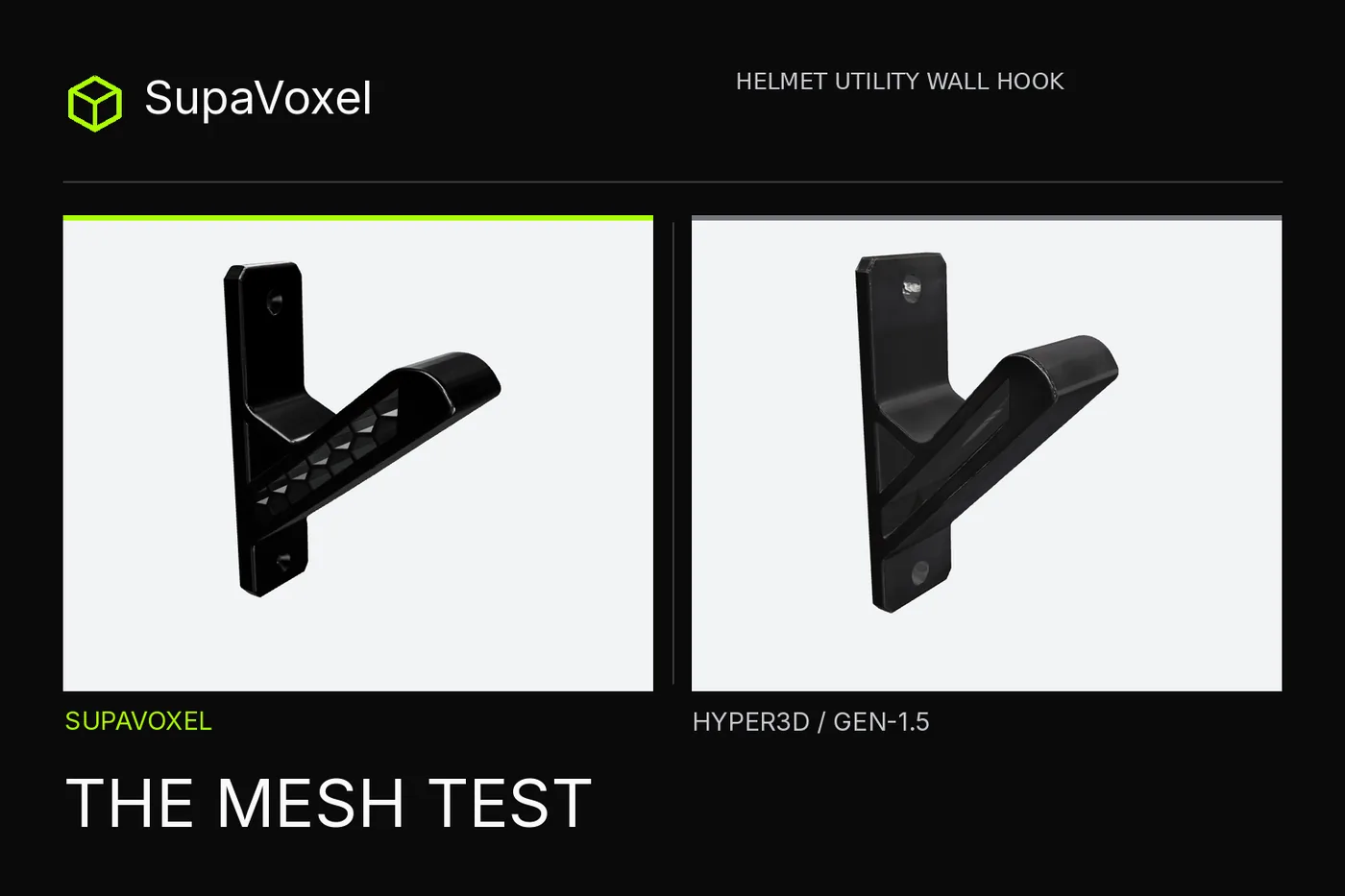
Independent review: both products were tested on my own accounts — free where offered and paid where not — with no vendor-provided access.
I needed a 3D concept of a wall hook, not a generic black bracket. In my picture, a diagonal brace had a row of separate open hexagonal cells. That lattice was the design cue. A customer rotating the model should be able to look through each cell, not at a shadow painted on a solid bar.
I sent one identical image to Hyper3D Rodin and SupaVoxel, got the downloadable versions onto my drive, then looked from the front, the back and with the materials turned off. Hyper3D's Free-downloadable Gen-1.5 file kept the two plate holes and raised hook but merged the hexagons into one long slot. SupaVoxel retained distinct real through-cuts. Then the topology test flipped the result: Hyper3D's welded mesh was watertight; SupaVoxel's had 15 boundary and 42 nonmanifold edges. The prettier match is not a finished printable mount.
My 60-second verdict — SupaVoxel is the closer visual match for this cell-braced hook; Hyper3D is the tidier unrepaired shell. I would use SupaVoxel as the closer digital starting model if the repeated openings are the feature I must show. I would not put either raw generation on a wall: no screw dimensions, print, installation or load test was supplied. If the only question is “which unrepaired shell is watertight,” Hyper3D wins, but its missing ribs fail this visual brief.
Eight paired decision rows — each row records the observation and the practical consequence:
- The specified lattice — Hyper3D one long brace slot; SupaVoxel separate open cells — only the second lets a viewer see through the actual repeated design.
- Wall plate and hook silhouette — both preserve two holes and a projecting hook — a tie at thumbnail scale, before inspecting the brace.
- Downloaded triangle budget — 120,000 vs 984,365 — more sampled geometry accompanied the retained cell divisions in this pair; count alone proves no strength.
- Welded boundary edges — 0 vs 15 — SupaVoxel's beautiful lattice still contains openings outside an approved closed solid.
- Welded nonmanifold edges — 0 vs 42 — repair and validation precede any slicer or volume claim.
- Face-connected regions — 1 vs 29 — a vertex-only touch does not promise a continuous manufactured part.
- Potential downward area — 4,399.9 vs 6,851.6 mm² at normalized longest side 120 mm — orientation-specific geometry, not measured support material.
- Measured fastener fit or load — none for either · Hyper3D unscored · SupaVoxel unscored — I will not rate a safety-relevant fixture from pixels.
These rows are not summed: for this visual job the individual openings outweigh the solid-screening rows.
Why was the lattice my first inspection point?
The source PNG shows a dark two-hole wall plate, a projecting curved hook and the row of discrete hexagonal openings across its diagonal brace. I can count holes in a close-up; I cannot safely infer a screw diameter or load rating from a perspective illustration. The image was independently generated but informed by a visual reference whose publication rights have not been verified. It remains a private test input until independent rights review. Both companies received the same 1,529,001-byte file and its fingerprint was checked against SupaVoxel's saved input. That equal source does not mean their internal cropping, prompts or interpretation matched; Hyper3D's two generations even displayed different auto-written descriptions. This is a comparison of actual resulting files, not two identical internal pipelines.
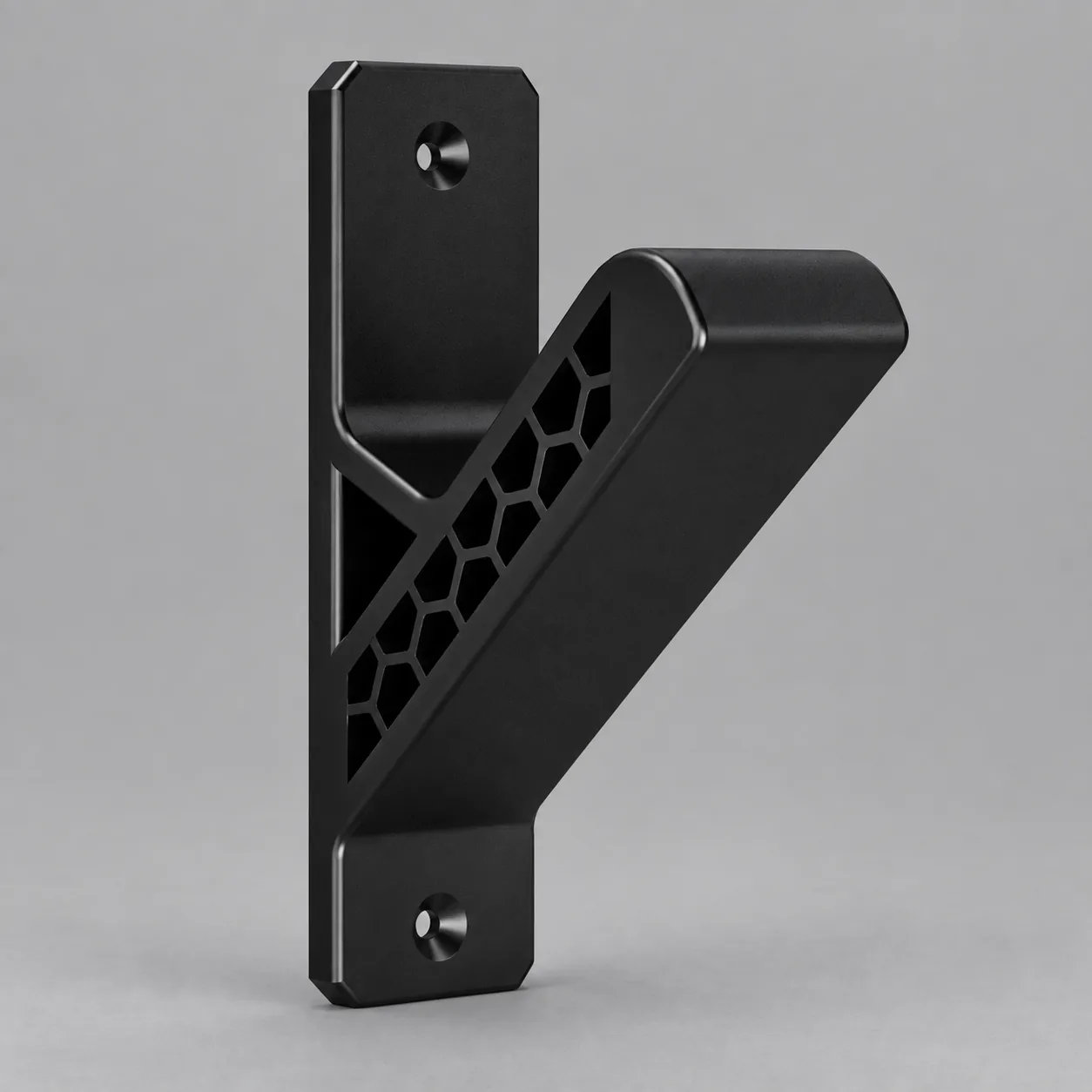 The identical test image separates the hexagonal cells; it supplies no fastening tolerances, load specification or publication-rights clearance.
Can you tell the difference at thumbnail size?
Not reliably. Both silhouettes have two plausible mounting holes and an upper lip that reads as a hook. Shrink the renders and I could mistake either for the intended object. But move into the brace: Hyper3D Gen-1.5 runs one continuous opening along it, where SupaVoxel leaves several distinct cells divided by ribs. That is why I do not let a thumbnail make the purchase decision. For a rotating product illustration, the brace is the feature a curious viewer will inspect; losing the ribs changes the design, even though the hook remains recognizable. This observation belongs to the downloadable Gen-1.5 file, not to the locked Gen-2.5 preview.
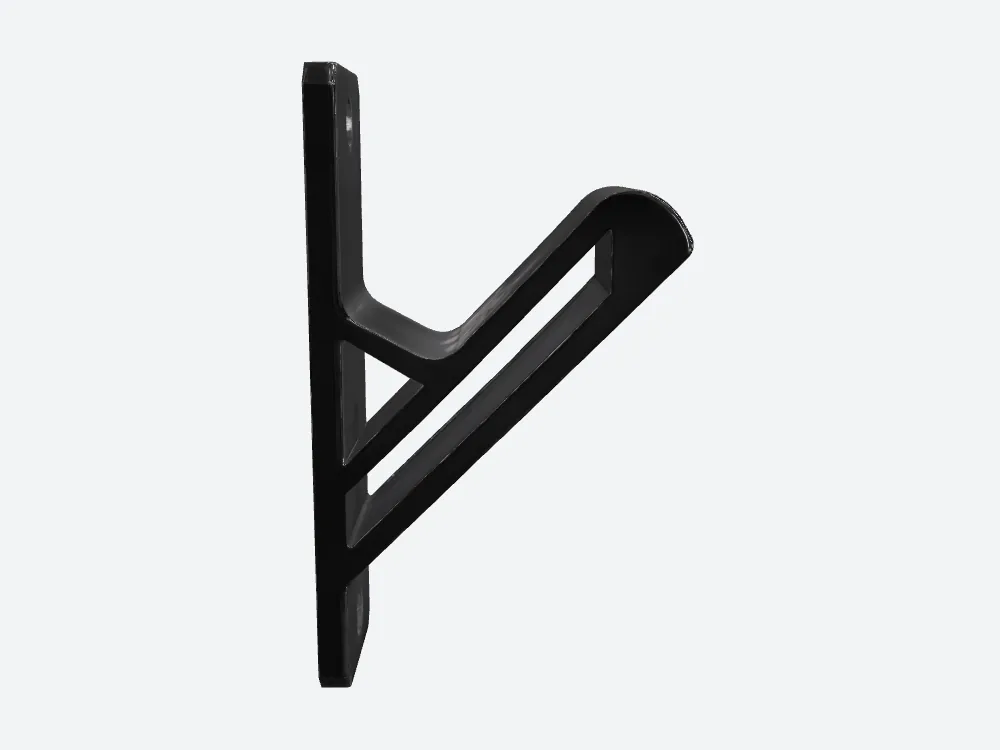 Hyper3D Gen-1.5 keeps the mounting holes but joins the brace openings into one slot.
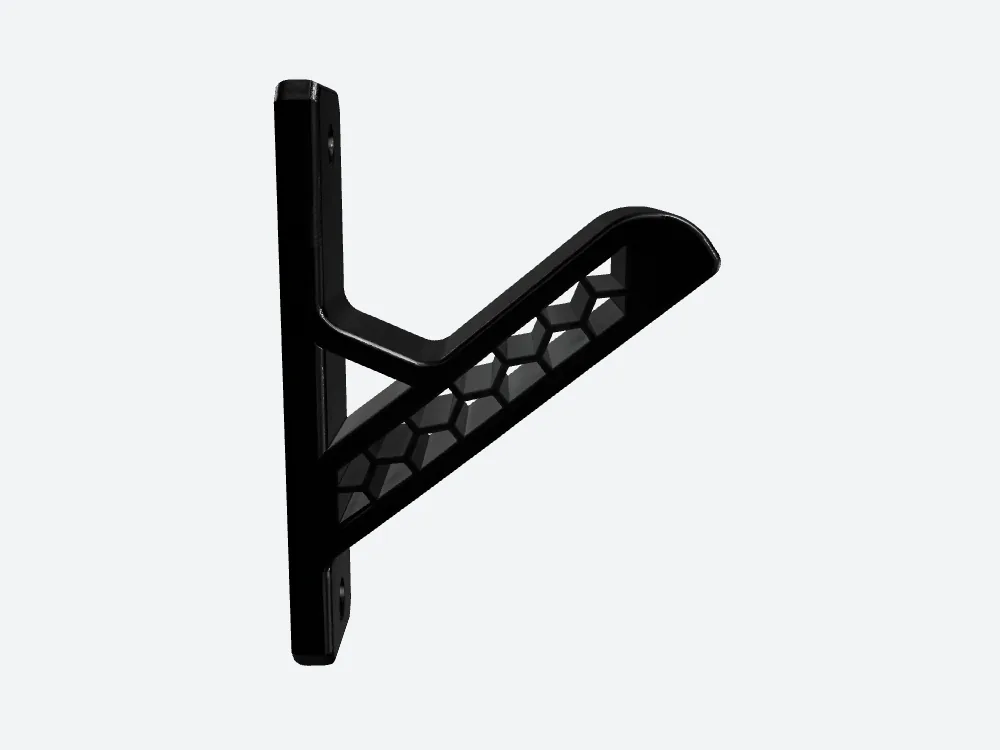 SupaVoxel's actual exported front retains separate apertures rather than a painted suggestion of them.
Is that honeycomb only painted onto the surface?
I checked the opposite view and the untextured geometry. In SupaVoxel's rear crop, the spaces between ribs let the background show through repeatedly; the gray mesh shows the same distinct cavities with the black finish removed. Hyper3D's rear keeps the long slot. A normal map can create highlights but cannot turn a single hole into several holes you can see through from the back. To face equivalent sides of the subject in the offline viewer, Hyper3D used a 270-degree yaw adjustment and SupaVoxel used zero; pitch, scale and lighting matched. I compared object-relative views, not numerically identical world yaw. That is a reason to trust the type of opening I see, not an excuse to claim pixel-level similarity.
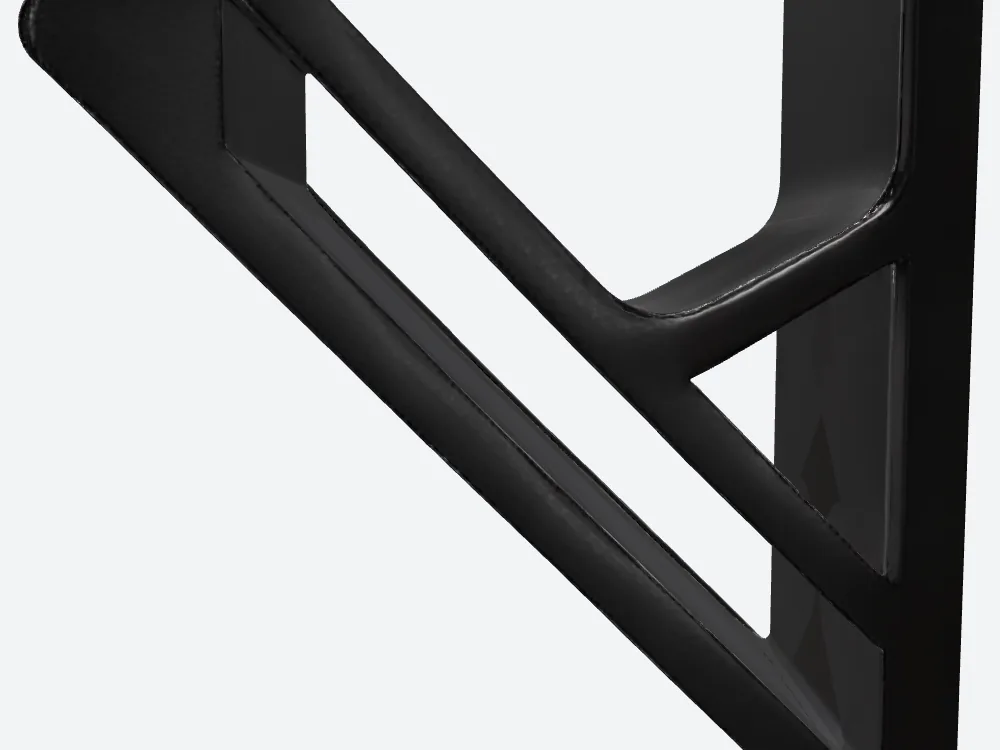 Hyper3D rear close-up: a single uninterrupted lengthwise brace opening.
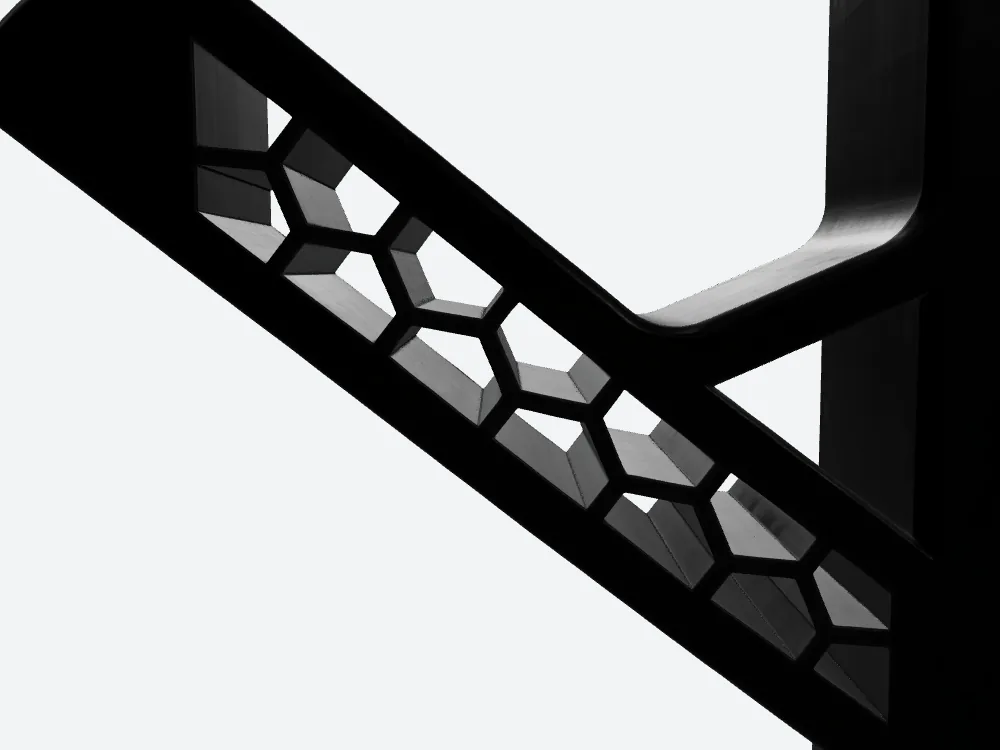 SupaVoxel rear close-up: separate holes divided by ribs, visible in downloaded geometry.
Does Hyper3D's watertight number rescue the lost cells?
No, but it wins another real contest. A raw export can duplicate vertices at UV texture seams; counting those as holes would be misleading. After welding equivalent seam positions, Hyper3D's PBR GLB yielded one face-edge-connected shell with consistent winding, zero boundary and zero nonmanifold edges. SupaVoxel still yielded 15 boundary edges, 42 nonmanifold edges and 29 face-connected regions. Its vertex-connectivity count was one, because touching at a point joins the graph; that does not join faces along proper edges. If I send the SupaVoxel file to a print pipeline I must repair and recheck it first. If I send the Hyper3D file unchanged, the slicer may have a cleaner mathematical solid but still not my requested lattice.
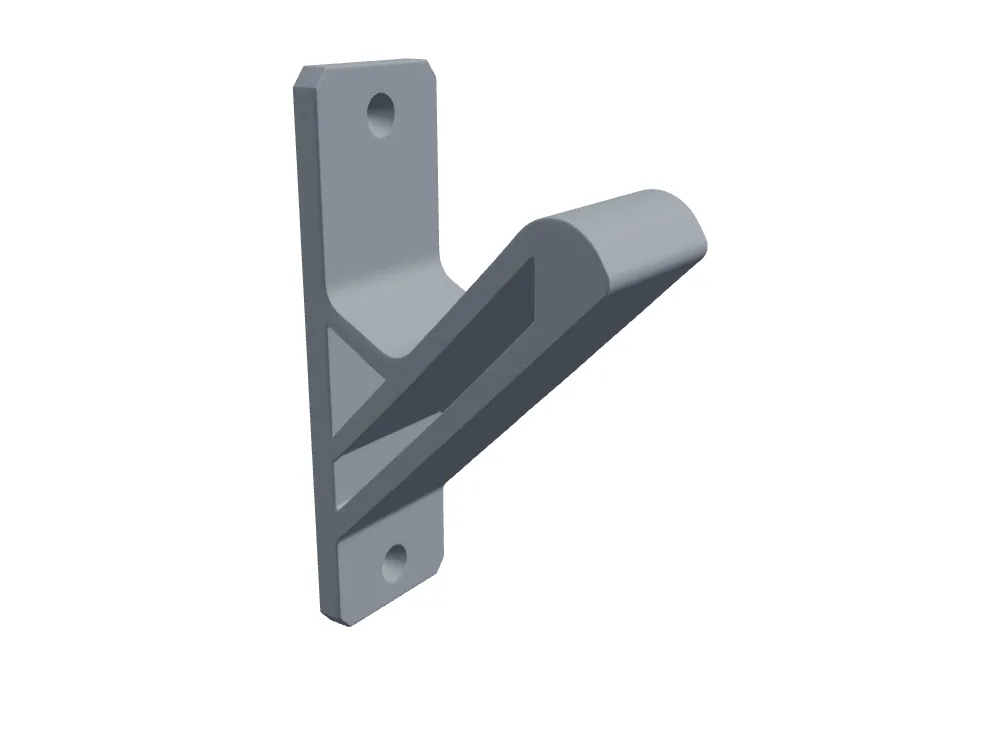 Hyper3D's gray welded model passes this static solid check while omitting the brace's cell separators.
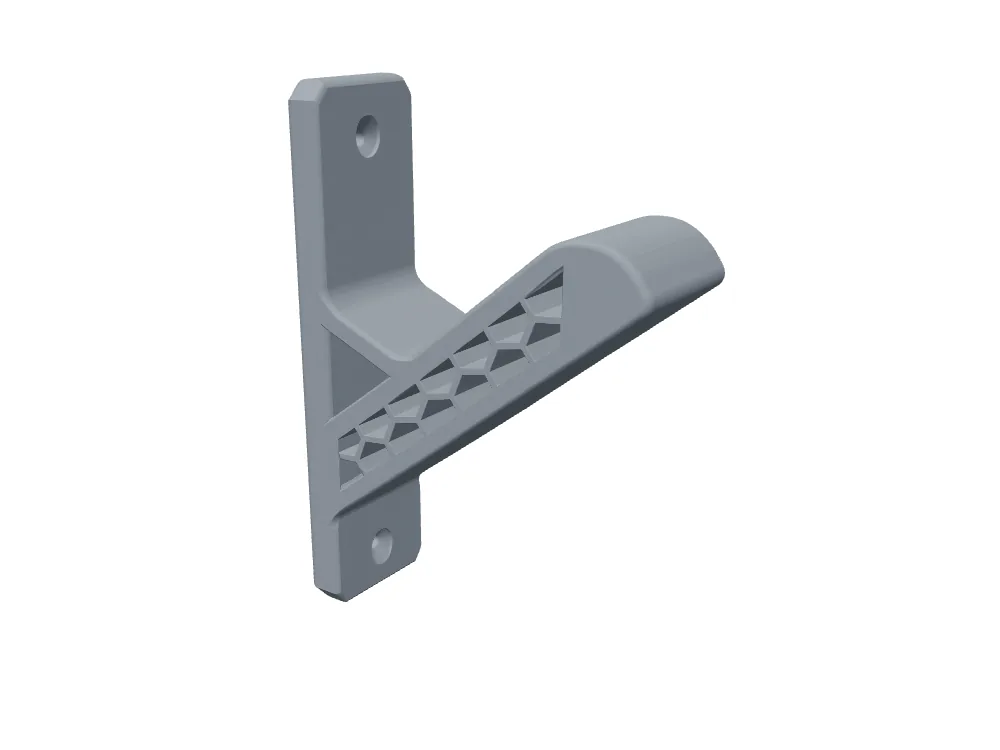 SupaVoxel retains the repeated openings without materials, but its welded mesh remains non-watertight.
What did nearly a million triangles do here?
SupaVoxel's file had 984,365 triangles and 512,433 exported vertices, versus Hyper3D's downloadable Gen-1.5 file at 120,000 and 72,216. The extra faces did coincide with genuinely preserved ribs in this one test. They did not buy valid edge incidence. At a synthetic scale where each file's longest bounding-box side is independently 120 mm, average edge lengths were 0.2963 mm for SupaVoxel and 0.794 mm for Hyper3D. These global averages do not measure minimum rib thickness. A nominal 0.4 mm FDM nozzle gives context for sampling but does not tell me whether any specific rib can print, much less survive a hanging load. More triangles solved the digital visual problem here; they did not solve the manufacturing one.
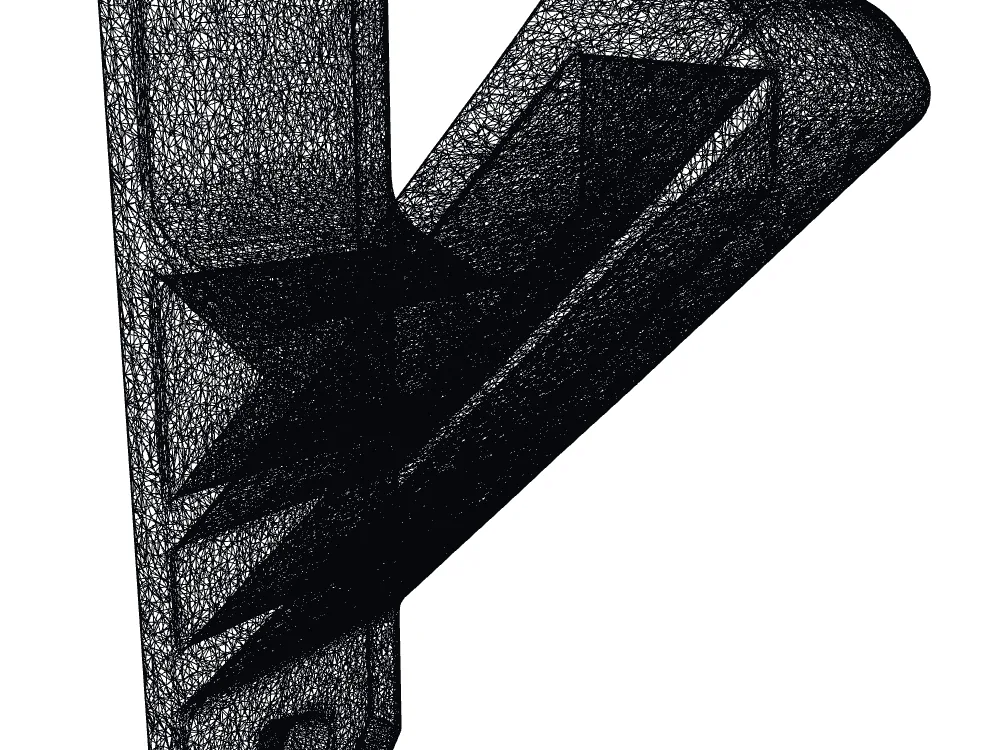 Hyper3D's sparser wireframe cannot reveal ribs that are absent from the geometry.
 SupaVoxel's dense wire overlay traces a richer brace but says nothing by itself about its 42 nonmanifold edges.
Could either model take a screw or hold a helmet?
Not on this evidence. At a normalized 120 mm longest side, Hyper3D's overall bounds are 37.51 × 120 × 70.62 mm while SupaVoxel's are 86.54 × 120 × 31.41 mm. Those different proportions warn me against treating either apparent plate hole as a standard fastener hole. The input had no center-to-center spacing, screw shank diameter, countersink depth, plate thickness, wall material, hook throat size or design load. A photogenic hook might miss the studs or shear across a brace. I would need a dimensioned design and a real prototype before selecting a fastener or hanging equipment. Even a watertight mesh test cannot simulate load or establish a safe mounting method.
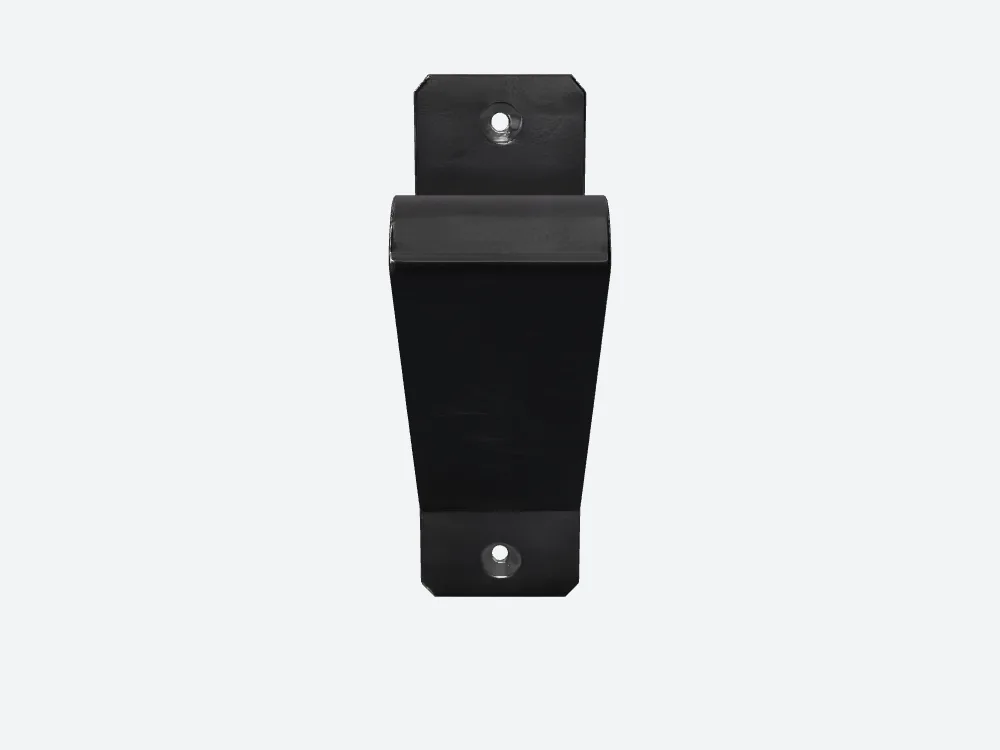 The side silhouette suggests a hook; neither its overall bounds nor this view measure screw clearance.
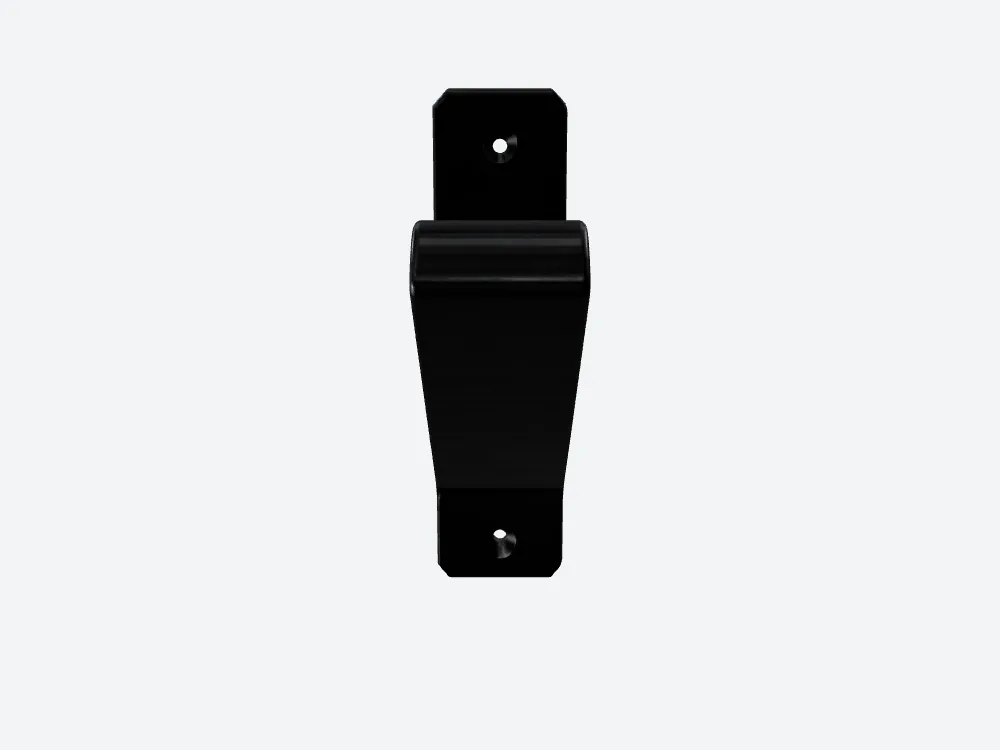 SupaVoxel's projection looks like a hook, but no wall contact or physical load was tested.
What can the downward-facing-area calculation tell me?
Only where this exported geometry faces down in one world orientation. With Y as up and a 45-degree downward normal threshold at the synthetic 120 mm scale, Hyper3D has 4,399.9 mm² and SupaVoxel 6,851.6 mm² of potential downward-facing area, 17.10% and 23.12% of their respective total surfaces. That does not count generated supports; orientation, bed contact and slicer settings were never chosen. Hyper3D alone also permits a validated closed-volume calculation: 61.08 cm³, translating to a hypothetical $2.14 of solid-fill resin at $35 per liter before support, waste or failed prints. SupaVoxel's open and nonmanifold mesh makes its corresponding volume and resin figure unavailable. These calculations let me plan what to measure next, not quote a build.
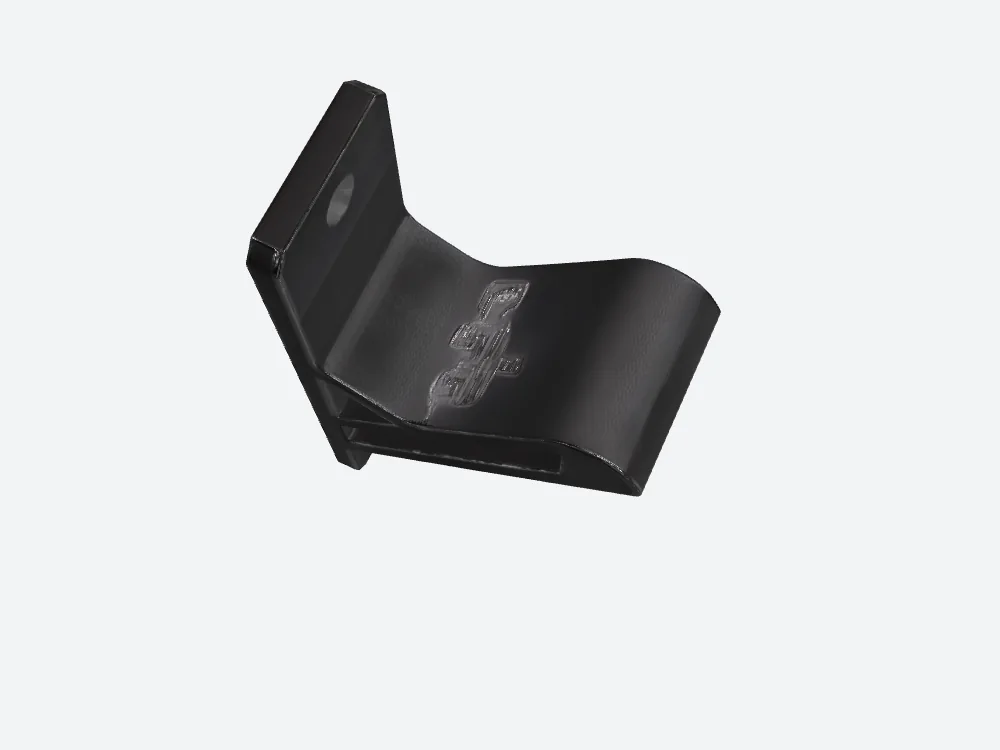 An overhead view checks visual profile, not bed placement or support volume.
Does Gen-2.5 change the verdict?
Not without an exported file. In this Free-account trial, a Gen-2.5 preview took 48.032 seconds and cost an independently attributed 0.5 Hyper3D credit. After a 25.133-second Confirm, clicking GLB Download produced a subscription requirement, not a file. We then tried Gen-1.5 separately and acquired its PBR output. I cannot borrow Gen-2.5's promising preview or high-poly dialog number to repair Gen-1.5's missing cells on paper. Perhaps an accessible different generation would make another mesh; it was not measured here. A buyer on Free should decide using the model they can retrieve, not the one they can orbit only in the web interface.
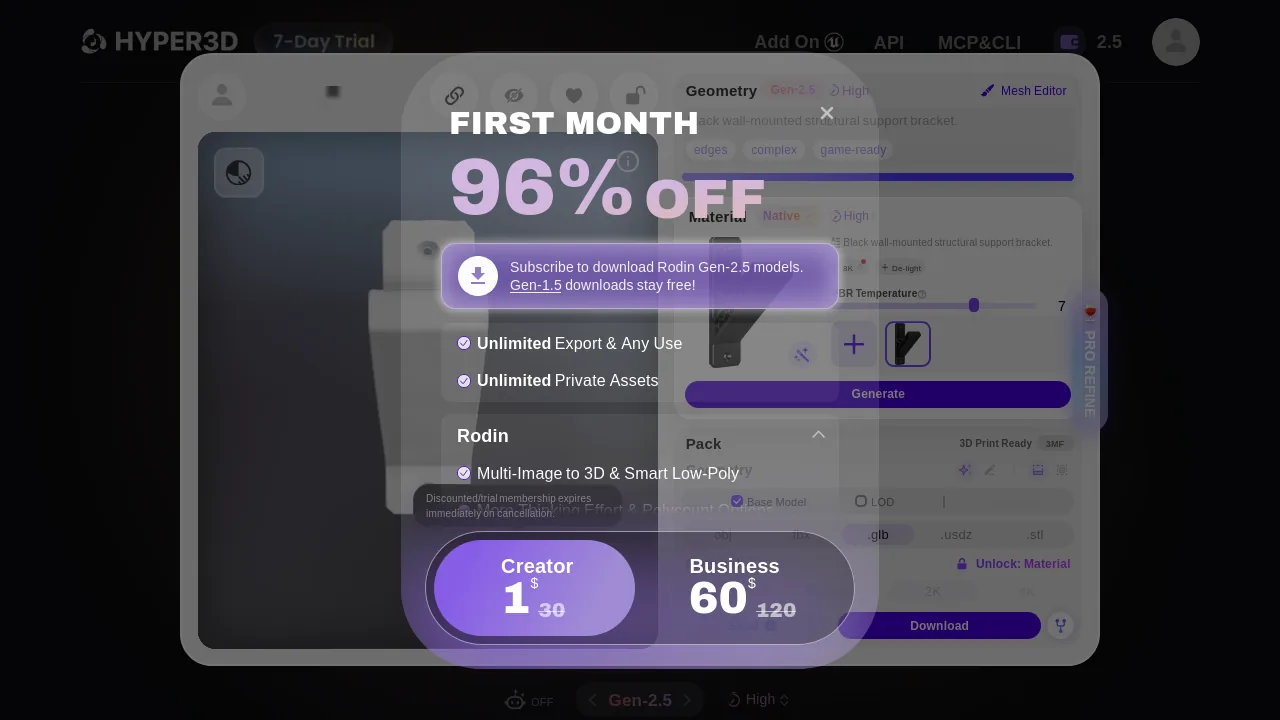 The Gen-2.5 preview reached a Free-account Download gate; every Hyper3D file number here refers to separate Gen-1.5.
Where Hyper3D genuinely wins
Its exported Gen-1.5 mesh is a cleaner static solid candidate, and its extracted PBR member is only 11.07 MB against SupaVoxel's 32.49 MB Original-size file. A tightly limited web scene or a mesh-repair-averse prototype designer may value that. The exchange rate is losing the image's conspicuous rib divisions: zero nonmanifold edges do not bring back missing shape. Hyper3D also has 1,743 sliver faces under the same diagnostic that found 459 in SupaVoxel, a useful reminder that no single health statistic settles every part of a mesh. I would not call its valid volume a successful wall-hook design. What it wins is a prerequisite check, with a visible fidelity concession.
What would I actually hand the illustrator?
For an orbiting visual of this cell-braced hook, I would give them the SupaVoxel GLB and the warning in the same handoff: 15 boundary edges, 42 nonmanifold edges, no verified physical load. That file matches the defining visual feature, so it is worth repairing if physical fabrication is later required. If the brief instead tolerates one long slot and requires an already closed unrepaired mesh, Hyper3D Gen-1.5 is a better starting shell. Neither takes a real screw or holds a helmet until that is measured; this preference is for a digital concept, not installation advice.
Test the one feature your image cannot afford to lose
Run SupaVoxel's image-to-3D workflow on your own design, then turn its material off and orbit to the back. If your critical negative space still passes light, you have a more useful visual candidate; inspect the exported mesh before trusting it in fabrication. If your workflow is a real wall fixture, redraw the design with dimensions, specify wall and fastener, repair and slice the model and physically test the load. Do not let a 3D generator's fluent black material turn an untested bracket into a safety claim.
How I checked it, and what I did not check
One checked 1,529,001-byte source PNG; a Hyper3D Gen-1.5 PBR GLB extracted from its browser-delivered ZIP; one actual SupaVoxel Original-size browser-exported GLB; one separate blocked Hyper3D Gen-2.5 trial with no acquired file. Same offline viewer, subject-relative front/back calibration (Hyper3D yaw 270°, SupaVoxel 0°), matched pitch, scale and light. Counts came from file parsing and topology after welding seam duplicates. Longest bounding-box side normalized independently to 120 mm for length, area and hypothetical resin math; this is not an installation size. No actual mesh repair, slicer support, FDM or resin print, hole measurement, screw fit, wall test, load capacity or source-image rights clearance was established. Keep the article and image unpublished pending that last review.
Originally published on Medium: Hyper3D Wall Hook Review 2026: Watertight Mesh, Missing Hexagons.